prove-yourself
Delayed disclosure and independently verifiable claims
Question. Can a person record a claim today, keep it private for a while, and later let anyone verify what was originally recorded?
Yes.
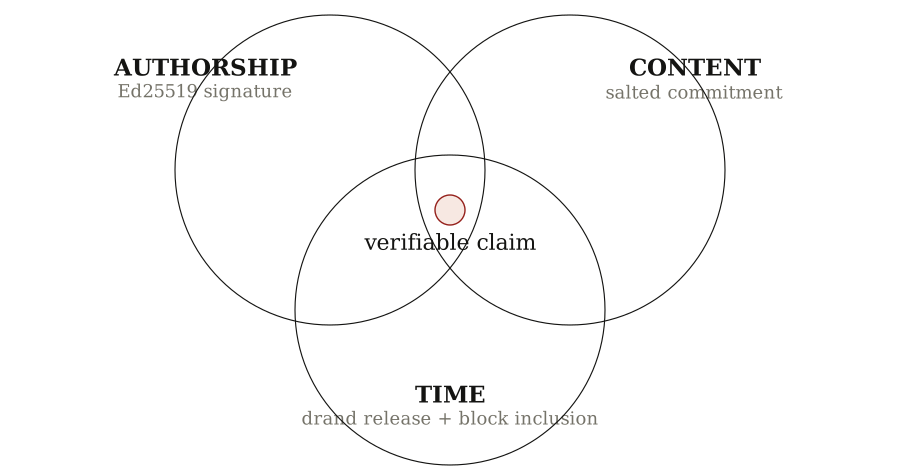
- The author writes a claim and signs its canonical attestation with an Ed25519 key. Optional public-account references connect that key to the author.
- A random 32-byte salt is included before hashing. The public commitment identifies the attestation without exposing a short claim to guessing.
- The signed attestation can be encrypted for a future drand round. The plaintext remains private until disclosure.
- After disclosure, a verifier checks the signature and recomputes the commitment from the revealed attestation.